The query “How khadi is made?” is as complex as it answers old questions of culture, identity, science, technology and commerce. Khadi is not only representative of Indian culture but also of sustainable and self-reliant living. Khadi was a symbol of self-rule and swadeshi (the economic application of self and boycotting foreign goods) during the freedom struggle, popularised by Mahatma Gandhi.
In the time when the world is going towards green and sustainable fashion, so, yes we do need to know how khadi is made more than ever. Unlike the authenticity of khadi fabric, the sincerity, skill and un-natural environmental damage of factory-made textile.
What is Khadi? A Foundation Before Knowing How Khadi is Made
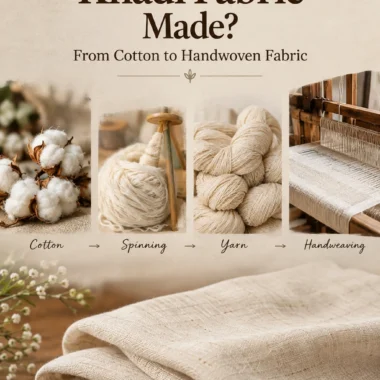
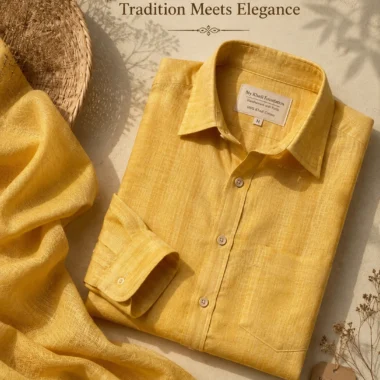
To understand how khadi is produced, one must know the basic presupposition of what actually khadi is. Khadi is a natural fabric, entirely the creation of human hands—spun on a traditional instrument known as the Charkha, and woven on handlooms.
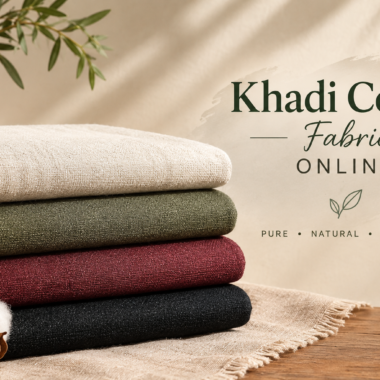
Cotton, silk and wool can be used to make khadi, and each has ranging textures and applications. It is unique because it has an uneven surface, a result of hand spinning. This imperfection is what makes khadi so beautiful and authentic.
Why Knowing How Khadi is Made Matters
Significance of knowing the process of khadi making is deeply ingrained in Indian history. Under the British rule (colonial period), Indian textile producers faced severe competition from imported, machine-produced goods fabrics.
Mahatma Gandhi reestablished khadi as a movement for Indians to make their own cloth. The spinning wheel or Charkha was a symbol of protest, as well as unity and.
Even today, bodies such the Khadi and Village Industries Commission are responsible for fostering the production of khadi throughout the nation.
Challenges in Khadi Production
The making of khadi is very important to the rural economy. It provides employment and encourages self-sufficiency.
The ideals of Mahatma Gandhi still motivate the khadi industry, which promotes local production and use.
Modern Relevance of Khadi
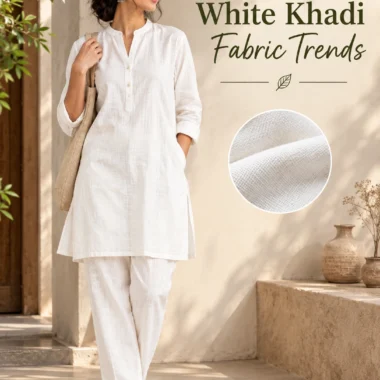
Today, the process of making khadi is what highlights its significance in sustainable fashion. With the increased awareness among the people towards environment friendly products, khadi is gaining more and more popularity with this generation of consumers.
Modern day designers are playing around with khadi and making it hip for the young.
Challenges in Khadi Production
Even with all its benefits, the method of making khadi is not without challenges. It takes time and cannot keep pace with the speed of machine-made materials.
There is also competition from lower-cost textiles. However, increasing consciousness towards sustainability is boosting the demand for khadi.
Future of Khadi in Global Markets
There seems to be a good future ahead for the khadi as worldwide demand for eco-friendly products is growing. Now you can understand why khadi is so valuable and unique.
Today, Khadi is accepted as sustainable fashion and culture at a global stage.
Conclusion: The real spirit of what Khadi the dress of India is all about!
The khadi’s production is essentially a combination of the archaic, modern and eco-friendly. There is faith to be seen at all levels from the raw fibre to the finished cloth.
Khadi is more than just a cloth, it is the soul of Indian tradition and way of life. When we understand how khadi is made, we are choosing to believe not just in its beauty, but in a future we can keep.