-
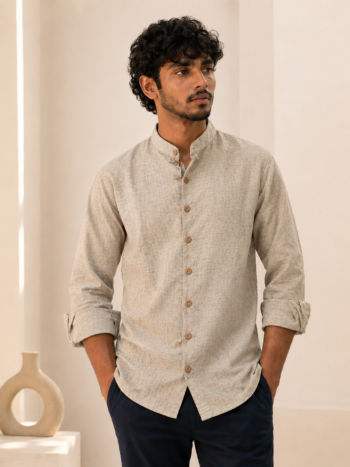
7 Best Men’s Beige Khadi Cotton Shirt – Avoid Dull Looks Original price was: ₹2,999.00.₹1,999.00Current price is: ₹1,999.00.Select options
A rich, textured beige shirt handwoven from 100% pure Khadi cotton.
Full-sleeve, regular fit, and KVIC-certified — built for all-day
comfort in India’s climate. Equally at home as smart-casual daywear
or festive ethnic-fusion wear. Handcrafted by rural artisans, every
purchase supports authentic Indian handloom heritage.
-
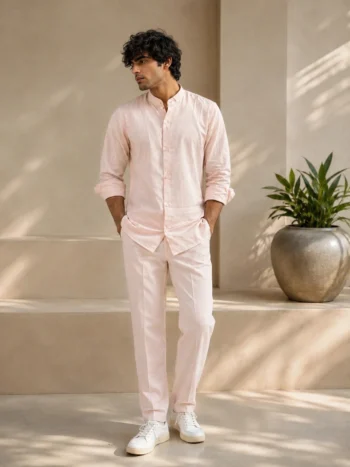
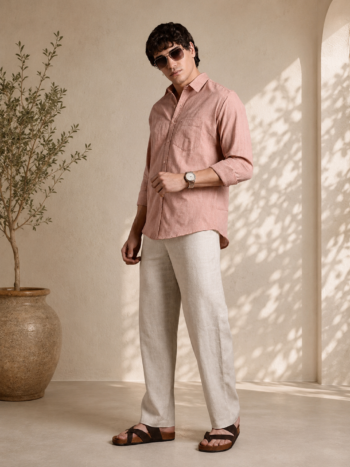
7 Best Men’s Peach Pink Khadi Co-Ord Set – Stylish Pick Original price was: ₹3,599.00.₹2,499.00Current price is: ₹2,499.00.Select options
A premium Men’s Peach Pink Khadi Co-Ord Set — a handwoven, 100% pure cotton shirt and trouser combination crafted by rural artisans. KVIC-certified, breathable, and effortlessly stylish, this ready-to-wear khadi set suits festive occasions, semi-formal events, and ethnic-fusion looks, offering everyday comfort with authentic Indian handloom character.
Colour Peach Pink
Fabric 100% Khadi
-
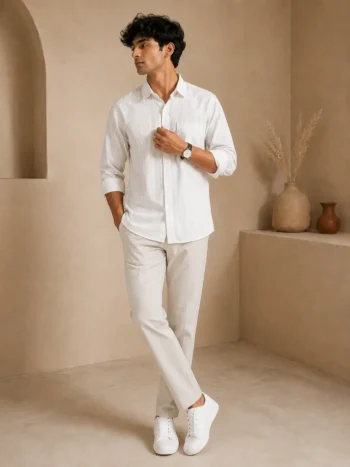
Best White Khadi Shirt for Men – Avoid Dull Styles 2026 Original price was: ₹1,999.00.₹1,299.00Current price is: ₹1,299.00.Select options
Handwoven from pure cotton khadi, this White Khadi Shirt for men features a textured striped weave and full sleeves for an easy formal-casual look. Breathable, skin-friendly, and sustainably made, it’s perfect for office wear, festive days, or everyday styling with jeans or chinos.
Colour White
Fabric 100% Khadi
-
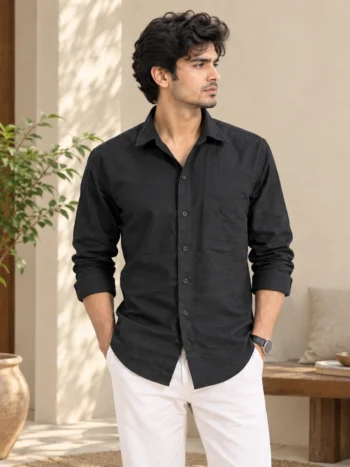
Buy Men’s Premium Black Khadi Cotton Shirt Original price was: ₹1,999.00.₹1,399.00Current price is: ₹1,399.00.Select options
- Fabric: 100% Khadi Cotton
- Colour: Premium Black
- Texture: Textured weave
- Fit: Regular Fit
- Occasion: Casual / Semi-Formal / Festive
- Certification: KVIC Certified (Govt. of India)
- Sizes: 36 to 54
- Price: ₹1,399 (MRP ₹1,999)
-
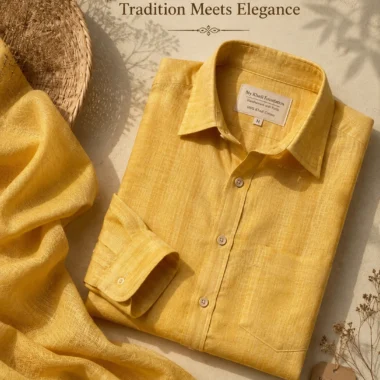
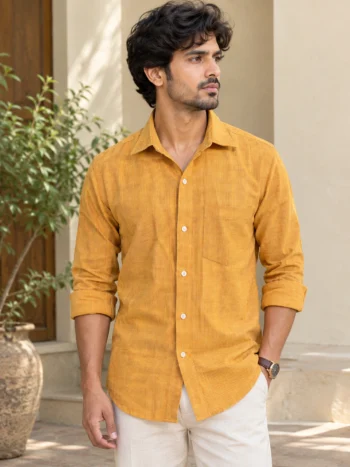
Buy Men’s Mustard Khadi Cotton Textured Shirt Online Original price was: ₹1,999.00.₹1,399.00Current price is: ₹1,399.00.Select options
- Fabric: 100% Khadi Cotton
- Colour: Mustard Yellow
- Texture: Textured weave
- Fit: Regular Fit
- Occasion: Casual / Semi-Formal / Festive
- Certification: KVIC Certified (Govt. of India)
- Sizes: 36 to 54
- Price: ₹1,399 (MRP ₹1,999)
-
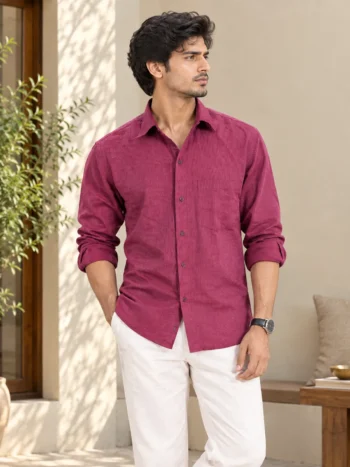
Classic Maroon Khadi Shirt for Men Original price was: ₹1,999.00.₹1,399.00Current price is: ₹1,399.00.Select options
- Fabric: 100% Khadi Cotton
- Colour: Classic Maroon
- Texture: Textured weave
- Fit: Regular Fit
- Occasion: Casual / Semi-Formal / Festive
- Certification: KVIC Certified (Govt. of India)
- Sizes: 36 to 54
- Price: ₹1,399 (MRP ₹1,999)
-
Men’s Khadi Cotton Casual Shirt – Brown Handloom Shirt Original price was: ₹1,999.00.₹1,299.00Current price is: ₹1,299.00.Select options
Color Brown Fabric Pure Cotton Fit Regular Sleeve Full Sleeves Design Solid, Single Pocket Occasion Casual, Formal -
Men’s Khadi Cotton Casual Shirt – Dusty Pink Handloom Shirt Original price was: ₹1,999.00.₹949.00Current price is: ₹949.00.Select options
Style Dusty Pink Casual Shirt Fit Relaxed, comfortable fit Material Soft, breathable fabric Occasion Casual wear and gatherings Details Button-down front, adjustable sleeves -
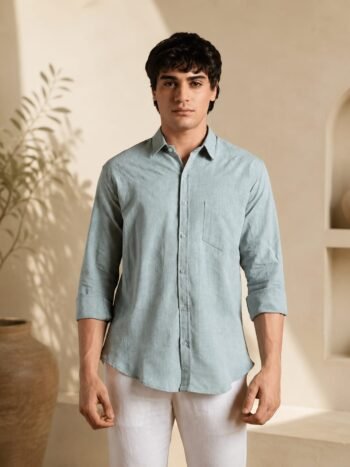
SKU: Men-khadi-Cotton-p1Men’s Khadi Cotton Casual Shirt – Light Green Handloom Shirt Original price was: ₹1,999.00.₹1,299.00Current price is: ₹1,299.00.Select options
Color Light Green Fabric Pure Cotton Fit Regular Sleeve Full Sleeves Design Solid, Single Pocket Occasion Casual, Semi-Formal -
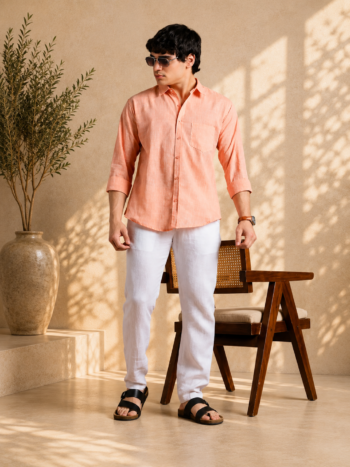
Men’s Khadi Cotton Casual Shirt – Light Peach Handloom Shirt Original price was: ₹1,999.00.₹999.00Current price is: ₹999.00.Select options
Color Light Peach Fabric Pure Cotton Fit Regular Sleeve Long Sleeves Occasion Casual, Office, Daytime Events -
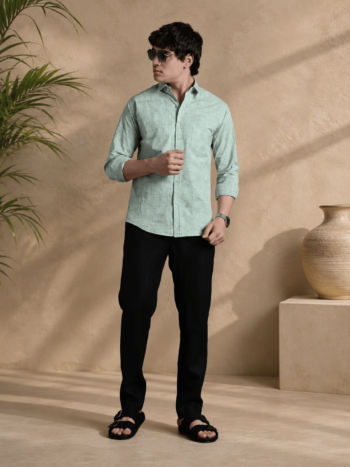
Men’s Khadi Cotton Casual Shirt – Mint Green Handloom Shirt Original price was: ₹1,999.00.₹949.00Current price is: ₹949.00.Select options
Style Mint Green Casual Shirt Fit Slim, comfortable fit Material Breathable, soft fabric Occasion Everyday casual and outings Details Textured look, button-down front, adjustable sleeves -
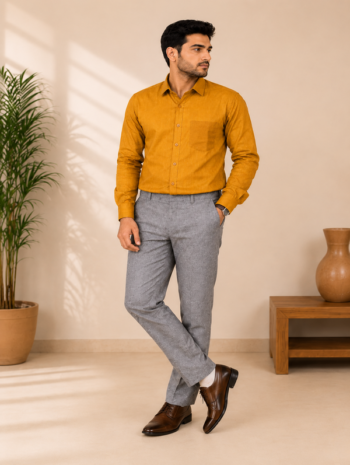
Men’s Khadi Cotton Classic Shirt – Mustard Brown Handloom Shirt Original price was: ₹1,999.00.₹1,299.00Current price is: ₹1,299.00.Select options
Color Mustard Brown Sleeve Full Sleeve Fit Regular Fit Material Cotton Pocket Chest Pocket Style Classic / Formal / Casual
When you ask anyone over fifty what Khadi means and what the benefits of Khadi are to them, “freedom struggle” is likely to come up before anything about style. Today’s twentysomethings will tell you that they are breathable, comfy, mindful, and even fashionable. They are both correct. The advantages of Khadi have always been more than just historical; they are useful and still hold true in 2026, just as they did when Gandhi first used a charkha.
This guide explains why Khadi still has a place in Indian wardrobes—not because of nostalgia, but because the fabric actually works.
Table of Contents
- What Is Khadi? Really?
- Top Benefits of Khadi Fabric
- Health and Comfort Advantages of Wearing Khadi
- Why Khadi Is One of the Most Sustainable Fabrics in India
- Economic and Social Importance of Khadi
- Khadi vs. Synthetic and Mill-Made Fabric
- Who Should Wear Khadi?
- How to Choose Genuine, Certified Khadi
- FAQs
- Final Thoughts
What Is Khadi? Really?
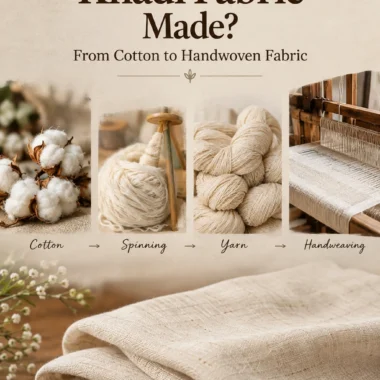
Khadi is a technique rather than a specific kind of fabric. Without the use of electricity at any point, the yarn is hand-spun on a charkha and then hand-woven on a traditional loom. This holds true for wool, silk, and cotton.
What distinguishes authentic khadi from power-loom knockoffs marketed under the same label is hand spinning. Additionally, it is the foundation of nearly every benefit covered in this essay, including durability and breathability.
The Khadi and Village Industries Commission (KVIC), which is in charge of certifying authentic handspun, handwoven fabric throughout India, continues to be the most trustworthy source for an official, government-backed explanation of what constitutes authentic Khadi.
Top Benefits of Khadi Fabric
Let’s examine each of these thoroughly because they all merit a closer examination.
1. Breathability That Mill-Made Fabric Can’t Match
Khadi yarn is never entirely uniform because it is hand-spun. Microscopic air pockets are created throughout the weave by those microscopic imperfections. This prevents perspiration from sticking to the skin and allows air to circulate in hot, muggy weather.
One of the main reasons people look for Khadi fabric benefits in the first place is because the comfort difference is apparent after the first wear rather than after weeks of use.
2. Naturally Temperature-Regulating
The same loose weave that cools you in summer traps a thin layer of air near the body in winter, offering light insulation without bulk. That’s why Khadi cotton, Khadi-wool blends, and stoles work across seasons rather than being a one-season fabric.
3. Gentle on the Skin
Most fast-fashion fabric goes through heavy chemical finishing to look crisp on a shelf. Khadi largely skips that process. It’s softer on sensitive skin, less likely to trigger irritation, and tends to feel better with every wash rather than stiffening up.
4. Built to Last
Unlike synthetic blends, real Khadi doesn’t thin out or pill. Families frequently hand down old Khadi clothing rather than throwing it away since it ages nicely, softens gradually, and maintains its shape.
5. A Textured, Premium Look
Handwoven khadi has a subtle irregularity that provides clothing a noticeable texture that machine-made fabric just cannot match. For this reason, Khadi has transitioned from simple white kurtas to structured shirts, modern-bordered sarees, and simple formal attire.
Health and Comfort Advantages of Wearing Khadi
The benefits of khadi go beyond fabric mechanics to include practical, everyday comfort factors.
It effectively absorbs moisture, which lessens the sense of being sweaty and clingy after long workdays.
It is helpful during India’s monsoon season since it dries more quickly than tightly woven synthetic blends.
Unlike polyester and other synthetic materials, it seldom ever retains odour.
Even with layered cold clothing, it doesn’t add needless thickness or weight because it is lightweight.
People who transition from synthetic everyday clothing to Khadi frequently report the same things: a fabric that feels calmer against the skin, less itching by evening, and fewer sweat patches.
Why Khadi Is One of the Most Sustainable Fabrics in India
This is where Khadi truly differs from the majority of contemporary apparel, which is why it’s frequently mentioned in relation to concepts like sustainable fashion and eco-friendly apparel.
Low Carbon Emissions
Nearly all weaving and spinning is done by hand. Compared to industrial fabric manufacture, the carbon footprint per metre is significantly lower because there is no power-loom electricity usage throughout the production step.
Naturally biodegradable
Khadi silk and cotton decompose organically over time since they are natural fibres. Conversely, synthetic materials like polyester can remain in landfills for decades without breaking down.
Low Water and Chemical Use
Many of the harsh dyeing and finishing chemicals used in fast fashion are avoided in traditional Khadi processing, which also results in less chemical runoff into local water systems. This is an issue that sustainability researchers frequently bring up and that the India Brand Equity Foundation (IBEF) thoroughly discusses in its reporting on India’s textile industry.
A Genuine Example of Handmade Fabric
Khadi is still one of the few readily accessible examples of genuine handcrafted cloth in a market overrun by mass production; it is spun and woven by individual craftspeople rather than machines. This distinction is important for both workmanship and sustainability.
Economic and Social Importance of Khadi
The importance of Khadi isn’t limited to the fabric itself — it extends directly to the people who make it.
- Every metre of authentic Khadi supports rural weaver and spinner households, often in regions with limited alternative employment.
- Khadi production is decentralised, meaning income reaches villages directly instead of concentrating in large factory hubs.
- The sector continues to receive policy attention under schemes promoted by the Ministry of Micro, Small and Medium Enterprises (MSME), which oversees KVIC and rural industry development.
- Several younger entrepreneurs are now building modern, design-forward Khadi brands, a trend that aligns closely with the kind of homegrown manufacturing push highlighted by Startup India.
Choosing Khadi, in that sense, is rarely just a fashion decision. It’s a small but direct contribution to rural livelihoods that fast fashion supply chains simply don’t offer.
Who Should Wear Khadi?
- To be honest, practically everyone benefits, although some groups stand to gain more than others.
- Since Khadi eliminates a lot of the harsh chemical finishing used in ordinary fabric, it is ideal for people with sensitive skin.
- People who work in humid cities want long-lasting, breathable shirts and kurtas.
- Conscious consumers that seek out apparel options that support ethical sourcing and sustainability.
- Khadi-wool blends and stoles provide warmth without artificial bulk, making them ideal for anyone layering for the winter.
If you’re exploring where to start, our Khadi fabric collection is a good first stop if you prefer custom tailoring, while ready-to-wear men’s wear and women’s wear ranges work well for everyday convenience.
How to Choose Genuine, Certified Khadi
Not everything labelled “Khadi” in the market is actually hand-spun. A few things worth checking before you buy:
- Look for KVIC certification, issued by the Khadi and Village Industries Commission – it confirms the fabric is genuinely handspun and handwoven.
- Check the texture closely. Authentic Khadi has a slightly uneven, organic feel that power-loom fabric doesn’t replicate well.
- Buy from sellers who are transparent about their artisan network. You can see ours on our Artisans Gallery page.
- Read up on policy and quality standards from the Ministry of Textiles, which oversees handloom and handicraft regulation in India.
At My Khadi Foundation, every product is certified by KVIC, and you can view our certification details on our Certificates page. If you’d like to know more about how we work with artisan communities, our About Us page covers that in detail.
FAQs
Frequently Asked Questions (FAQs)
1. What are the main benefits of Khadi fabric?
The benefits of Khadi include excellent breathability, skin-friendliness, durability, biodegradability, and support for rural artisan livelihoods. These qualities make Khadi a sustainable and comfortable fabric for everyday wear.
2. Why should I choose Khadi over regular cotton?
Khadi is completely hand-spun and hand-woven, unlike regular cotton, which is machine-spun and machine-woven. One of the key benefits of Khadi is its superior breathability, unique handcrafted texture, and lower environmental impact compared to conventional cotton fabrics.
3. Is khadi suitable for summer and winter both?
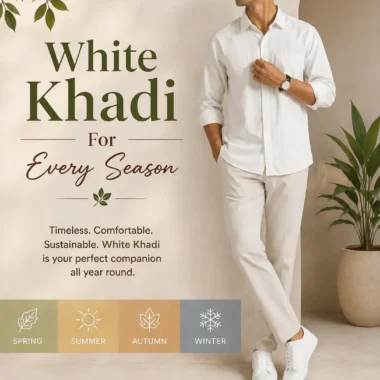
Yes. One of the biggest benefits of Khadi is its year-round comfort. Its loose, irregular weave allows air to circulate during summer while trapping a thin layer of warmth in winter, making it a truly seasonless fabric.
4. Is Khadi good for sensitive skin?
Generally, yes. Among the many benefits of Khadi, its minimal chemical processing makes it gentler on sensitive or easily irritated skin than many synthetic or heavily processed fabrics.
5. How is Khadi different from handloom fabric?
Not every handloom fabric is khadi, but every khadi fabric is handloom. Handloom refers only to fabric woven on a hand-operated loom, whereas Khadi requires the yarn to be hand-spun before weaving. This traditional process is one of the unique benefits of Khadi, giving it its distinctive texture and authenticity.
6. Does wearing Khadi actually help rural artisans?
Yes. One of the social benefits of Khadi is that authentic, certified Khadi production is decentralised and village-based. Buying genuine Khadi directly supports spinner and weaver households, helping preserve traditional craftsmanship and rural livelihoods.
7. Is Khadi more expensive than regular clothing?
Because Khadi is handmade, it may cost slightly more than regular clothing. However, one of the long-term benefits of Khadi is its durability and extended lifespan, which often provide better value for money over time.
8. How do I know if Khadi is genuine?
Look for KVIC certification, check for the characteristic uneven hand-spun texture, and buy from sellers who are transparent about their artisan sourcing. These signs help ensure you enjoy the true benefits of Khadi by purchasing authentic products.
9. Can Khadi be worn for formal occasions?
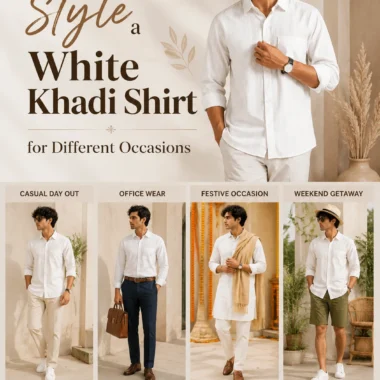
Absolutely. Modern Khadi is available in structured shirts, tailored kurtas, blazers, and formal trousers, making it suitable for office wear, business meetings, and special occasions. This versatility is one of the practical benefits of Khadi.
10. Is Khadi an eco-friendly clothing option?
Yes. One of the greatest benefits of Khadi is its sustainability. Khadi is made from natural, biodegradable fibres, requires little to no electricity during production, and generally avoids harsh chemical processing. These benefits of Khadi make it one of India’s most eco-friendly and responsible clothing choices.
Final Thoughts {#final-thoughts}
The advantages of Khadi were never so much about politics or nostalgia as they were about a fabric that breathes well, lasts a long time, and directly benefits the people who create it. The only thing that has changed is that more people are taking notice.
By the second or third wear, the fabric usually speaks for itself, whether you’re purchasing your first Khadi kurta or gradually changing your regular wardrobe.
Build Your Khadi Wardrobe, the Right Way
Explore certified, handwoven Khadi clothing and fabric – sourced directly from artisan looms, with no shortcuts in between.