Khadi vs. Fast Fashion: The Real Environmental Impact
A data-backed comparison of carbon footprint, water usage, and everyday styling — with 5 ways to wear one Khadi piece for every occasion.
Every year, Indian shoppers buy more clothes and keep them for less time than ever before. Fast fashion has made this possible — cheap, trend-driven garments that are designed to be discarded, not treasured. But behind every ₹399 t-shirt is a hidden cost paid in water, carbon, and chemical pollution. On the other side sits Khadi — a fabric spun and woven entirely by hand, without a single unit of electricity. In 2026, as sustainability moves from a buzzword to a buying criterion, it's worth asking: what does the data actually say?
The Water Footprint: Litres Tell the Real Story
Textile production is one of the thirstiest industries on the planet. Producing a single conventional cotton t-shirt can consume between 10,000 and 20,000 litres of water across the growing, dyeing, and finishing stages. Khadi flips this equation almost entirely, because it skips mechanised wet-processing and relies on manual spinning and weaving.
That means a single metre of mill-made fabric can use roughly 18 times more water than the same length of hand-spun Khadi. Multiply that across an entire wardrobe, and the gap becomes enormous.
The Carbon Footprint: Electricity vs. Human Energy
Fast fashion's carbon problem starts long before the garment reaches a store shelf. The fashion sector as a whole is responsible for close to 8-10% of global carbon emissions — more than international flights and shipping combined — largely because of energy-intensive spinning mills, power looms, synthetic dyeing, and long-haul logistics. Synthetic fibres make this worse: manufacturing polyester alone releases around 2.1 kg of CO2 for every kilogram of fibre produced, since it is derived from petroleum.
Khadi production, by contrast, uses no grid electricity at all. Spinning on a charkha and weaving on a handloom is powered entirely by human effort — researchers estimate the entire process of producing one metre of Khadi consumes the human-energy equivalent of roughly 0.17 kWh, with zero fossil fuel input. No power loom, no synthetic dye vats, no industrial boiler.
| Metric | Fast Fashion / Mill Cotton | Khadi |
|---|---|---|
| Water per metre of fabric | ~55 litres | ~3 litres |
| Energy source | Grid electricity, power looms | Human-powered charkha & handloom, zero electricity |
| Average garment lifespan | Worn 5-7 times before discard | Designed for years of regular wear |
| Wastewater contribution | Part of industry's 20% global share | Minimal to none in traditional dyeing |
Beyond the Numbers: Why Khadi Wins on Longevity
Sustainability isn't only about how a fabric is made — it's also about how long it lasts. Khadi is breathable, gets softer with every wash, and doesn't rely on synthetic coatings that peel or pill over time. A well-cared-for Khadi fabric piece can genuinely outlast several fast-fashion equivalents, which lowers its effective environmental cost per wear far below what the raw production numbers alone suggest.
One Khadi Kurta, Five Occasions: The Ultimate Style Guide
The biggest myth about Khadi is that it's only for Independence Day or formal ceremonies. In reality, one well-chosen Khadi kurta or saree can be restyled for an entire week of very different occasions. Here's how.
The Boardroom-Ready Look
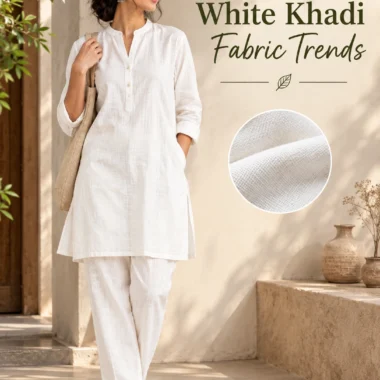
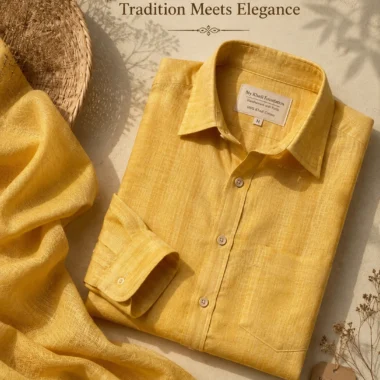
Pick a solid, neutral-toned Khadi kurta or a classic white Khadi dress shirt and tuck it into tailored trousers. Add a slim belt and minimal jewellery. Khadi's natural breathability means you stay cool through long meetings — no clingy synthetic fabric sticking to your back by 3 PM.
The Effortlessly Elegant Look
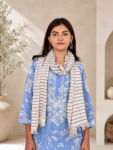
Swap the trousers for a fitted silhouette and layer a Khadi cotton stole loosely over one shoulder in a contrasting shade. Roll up the sleeves, add statement earrings or a wristwatch, and let the natural texture of the fabric do the talking — it photographs beautifully in warm evening light.
The Relaxed Weekend Look
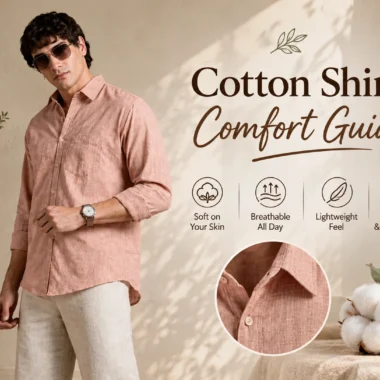
Go for a mint green Khadi casual shirt left slightly untucked over light denim or linen pants. Push the sleeves up to the elbow, skip the belt, and finish with sunglasses. This is Khadi in its most laid-back, Instagram-ready form.
The Festive Statement Look
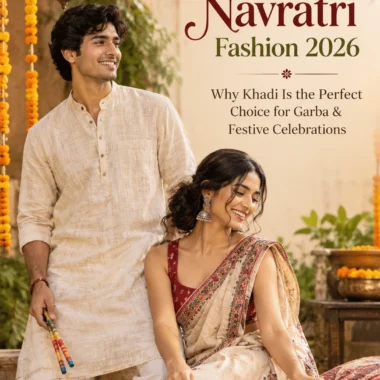
Layer a Khadi kurta with a contrasting handloom stole or dupatta in a richer, jewel-toned colour from the set of five. Add traditional jewellery and juttis. Because Khadi drapes with a natural, slightly textured fall, it holds festive embellishments and borders exceptionally well without looking stiff.
The Everyday Comfort Look
Pair any breathable piece from the Khadi shirts collection with joggers or a simple cotton pyjama set. No accessories needed — just comfort, softness, and a fabric that only improves with every wash.
The common thread across all five looks is simple: it's not five different garments, it's one sustainable piece styled five different ways — which is the entire point of slow fashion. Fewer garments, worn more often, in more ways, for much longer.
The Bottom Line
The environmental math is hard to argue with. Roughly 18x less water per metre, zero electricity in production, and a fabric built to be worn for years rather than weeks — Khadi is one of the few genuinely low-impact textile choices available at scale in India today. Choosing it isn't just a nod to heritage; it's a measurable reduction in water use and carbon output, garment for garment.
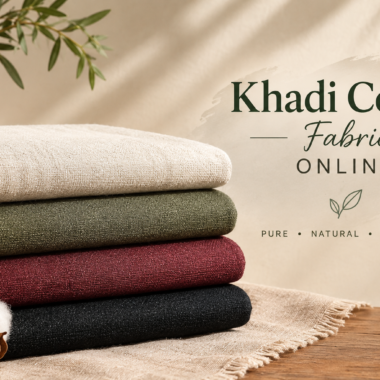
Explore the full range of handloom, zero-electricity Khadi essentials — from men's shirts to women's wear to raw Khadi fabric by the metre — and build a wardrobe that does more with less.
Ready to Make the Switch to Khadi?
Shop handwoven, sustainable Khadi essentials at My Khadi Foundation — where every thread is spun by hand, not machine.
Data referenced: KVIC-affiliated research on Khadi water and energy use; UN Environment Programme and peer-reviewed textile lifecycle studies on fast fashion's global carbon and wastewater share.